




Growth is a positive sign for any manufacturing business. New customers, expanding production capacity, additional facilities, and larger supply chains often indicate that a company is moving in the right direction. However, growth also introduces new operational challenges.
As factories expand, many manufacturers find that spreadsheets, disconnected software systems, and manual reporting processes can no longer support increasing operational complexity. Inventory becomes harder to track, production planning becomes more demanding, and decision-making slows due to limited visibility across departments.
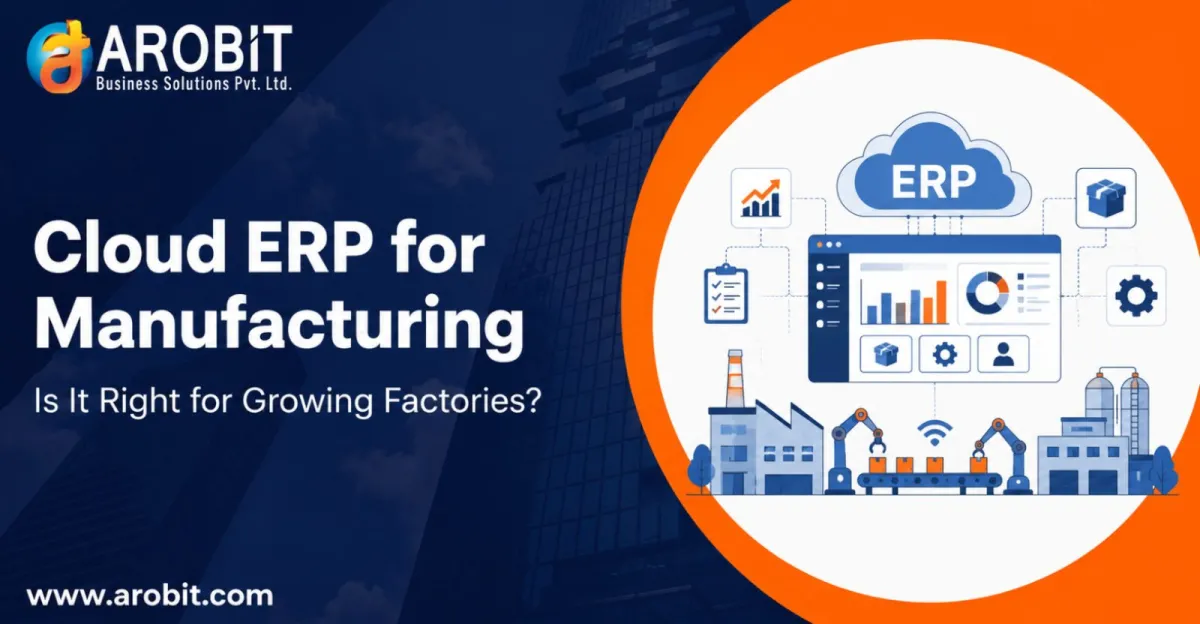
This is where Cloud ERP for manufacturing is gaining attention. Cloud-based enterprise resource planning systems provide manufacturers with centralized access to operational data, helping them manage production, inventory, procurement, finance, and supply chain activities through a unified platform.
For growing factories, the key question is not whether ERP is important, but whether a cloud-based ERP model is the right fit for their long-term operational goals.
Why Growing Manufacturers Outgrow Traditional Systems
Many manufacturers begin with basic tools and standalone software applications to manage operations.
Initially, this approach may be sufficient. However, as the business grows, operational complexity increases significantly.
Common challenges include:
Disconnected business systems
Manual inventory tracking
Delayed reporting
Limited production visibility
Procurement inefficiencies
Data duplication
Difficulty scaling operations
These challenges often result in slower decision-making and reduced operational efficiency.
Growing manufacturers need systems capable of supporting larger workloads, additional users, and expanding operational requirements.
What Is Cloud ERP for Manufacturing?
Cloud ERP for manufacturing is an enterprise resource planning system hosted on cloud infrastructure rather than on-premise servers.
Instead of maintaining hardware and software within the factory environment, manufacturers access ERP functionality through secure internet-based platforms.
Cloud ERP solutions typically manage:
Production planning
Inventory management
Procurement
Warehouse operations
Financial management
Quality control
Supply chain processes
Reporting and analytics
This centralized approach allows teams to access real-time information from multiple locations while reducing the burden of maintaining complex IT infrastructure.
How Cloud ERP Differs from Traditional ERP
Manufacturers evaluating ERP solutions often compare cloud-based and on-premise deployment models.
Feature | Traditional ERP | Cloud ERP |
Infrastructure | On-Premise Servers | Cloud Hosted |
Initial Investment | Higher | Lower |
Software Updates | Manual | Automated |
Scalability | Limited by Hardware | Highly Scalable |
Remote Access | Restricted | Accessible Anywhere |
Maintenance Responsibility | Internal IT Team | ERP Provider |
Deployment Speed | Longer | Faster |
For growing organizations, scalability and accessibility are often major factors influencing ERP decisions.
Benefits of Cloud ERP for Growing Factories
Improved Operational Visibility
One of the primary advantages of Cloud ERP for manufacturing is improved visibility across business functions.
Decision-makers can access real-time information regarding:
Production status
Inventory levels
Purchase orders
Customer orders
Financial performance
This visibility helps management identify issues quickly and make informed decisions.
Faster Scalability
Manufacturers experiencing growth often need systems that can expand alongside the business.
Cloud ERP platforms allow organizations to:
Add users easily
Support additional facilities
Manage higher transaction volumes
Expand operational capabilities
This flexibility reduces the need for major infrastructure investments during growth phases.
Reduced IT Management Burden
Maintaining on-premise ERP environments requires ongoing investment in servers, upgrades, security management, and technical support.
Cloud solutions transfer much of this responsibility to the ERP provider.
As a result, manufacturers can focus more resources on production and business operations rather than infrastructure management.
Supporting Multi-Location Manufacturing Operations
Many growing manufacturers expand beyond a single production facility.
Managing operations across multiple locations creates challenges related to:
Inventory visibility
Production coordination
Procurement management
Reporting consistency
A Cloud ERP for manufacturing solution helps centralize information across locations, providing a unified view of operations.
This enables leadership teams to monitor performance across facilities while maintaining consistent business processes.
Improving Inventory and Supply Chain Management
Inventory management becomes increasingly complex as manufacturing operations grow.
Without accurate inventory visibility, organizations may experience:
Excess inventory
Material shortages
Production delays
Increased carrying costs
Cloud ERP systems provide real-time inventory tracking and supply chain visibility.
Benefits include:
Improved stock accuracy
Better procurement planning
Faster inventory movement
Reduced waste
Improved warehouse efficiency
These improvements contribute directly to stronger operational performance.
Enabling Better Production Planning
Production planning requires accurate information regarding inventory availability, machine capacity, workforce resources, and customer demand.
Disconnected systems often make this difficult.
With Cloud ERP for manufacturing, production planners can access integrated information that supports:
Capacity planning
Material requirement planning
Production scheduling
Resource allocation
Demand forecasting
Better planning reduces production disruptions and supports more efficient operations.
Security Considerations for Cloud ERP
Some manufacturers hesitate to adopt cloud solutions because of concerns about data security.
Modern cloud ERP platforms typically include:
Data encryption
Access controls
Multi-factor authentication
Automated backups
Disaster recovery capabilities
Continuous security monitoring
In many cases, cloud providers can offer security resources that exceed what individual manufacturers can maintain internally.
Organizations should still evaluate vendor security practices carefully during the ERP selection process.
Is Cloud ERP Right for Every Manufacturer?
While cloud ERP offers significant advantages, it is important to evaluate business requirements carefully.
Cloud ERP may be particularly beneficial for manufacturers that:
Are experiencing rapid growth
Operate multiple facilities
Require remote access
Need faster scalability
Want to reduce IT infrastructure costs
Require real-time operational visibility
However, businesses with highly specialized compliance requirements or unique infrastructure constraints may need additional evaluation before selecting a deployment model.
The goal is not simply adopting cloud technology but selecting an ERP strategy that supports long-term business objectives.
Key Features to Look For
Manufacturers evaluating cloud ERP solutions should prioritize features that support operational growth and efficiency.
Production Management
The ERP platform should support planning, scheduling, and production monitoring activities.
Inventory Visibility
Real-time inventory tracking helps improve procurement and production decision-making.
Reporting and Analytics
Executives need access to actionable insights that support strategic planning.
Scalability
The system should support future growth without requiring major infrastructure investments.
Partnering with an experienced manufacturing software development company can help manufacturers evaluate ERP requirements and implement solutions that align with operational goals.
Business Benefits Beyond Technology
The value of ERP extends far beyond software functionality.
Organizations implementing Cloud ERP for manufacturing often experience improvements in:
Operational efficiency
Inventory control
Production visibility
Supply chain coordination
Financial reporting
Business agility
These benefits help manufacturers build a stronger operational foundation for future growth.
Implementing Cloud ERP Successfully
Successful ERP implementation requires careful planning and organizational alignment.
Manufacturers should focus on:
Defining business objectives
Standardizing processes
Improving data quality
Training users
Managing organizational change
ERP projects achieve the greatest success when viewed as business transformation initiatives rather than technology upgrades.
Working with a trusted manufacturing software development company can help organizations design and implement ERP solutions that support both immediate operational requirements and long-term expansion plans.
Key Takeaways
Growing manufacturers often outgrow disconnected systems and manual processes.
Cloud ERP centralizes production, inventory, procurement, and financial management.
Real-time visibility improves decision-making and operational control.
Cloud deployment supports scalability without major infrastructure investments.
Inventory management and production planning become more efficient through integrated data.
Multi-location manufacturing operations benefit from centralized visibility and reporting.
Conclusion
Growth creates opportunities, but it also introduces operational complexity that can be difficult to manage with disconnected systems and manual processes. Manufacturers need technology platforms capable of supporting increased production volumes, larger workforces, expanding supply chains, and more sophisticated business operations.
Cloud ERP for manufacturing provides a centralized approach to managing production planning, inventory control, procurement, finance, and operational reporting. Its scalability, accessibility, and real-time visibility make it a compelling option for manufacturers seeking greater efficiency and long-term operational control.
For growing factories evaluating ERP modernization initiatives, cloud-based solutions can provide the flexibility needed to support future expansion. Companies like Arobit help manufacturers design and implement tailored ERP solutions that align technology investments with practical business objectives, helping organizations improve visibility, streamline operations, and support sustainable growth.
FAQs
1. What is Cloud ERP for manufacturing?
Cloud ERP for manufacturing is a cloud-hosted enterprise resource planning system that helps manufacturers manage production, inventory, procurement, finance, supply chain operations, and reporting through a centralized platform.
2. How does Cloud ERP help growing manufacturers?
Cloud ERP helps growing manufacturers improve visibility, streamline processes, support scalability, reduce IT infrastructure requirements, and manage operations more efficiently across departments and locations.
3. Is Cloud ERP secure for manufacturing businesses?
Yes. Modern cloud ERP platforms typically include advanced security measures such as encryption, access controls, multi-factor authentication, automated backups, and disaster recovery capabilities to protect business data.


Comments
No comments yet. Be the first to share your thoughts!