




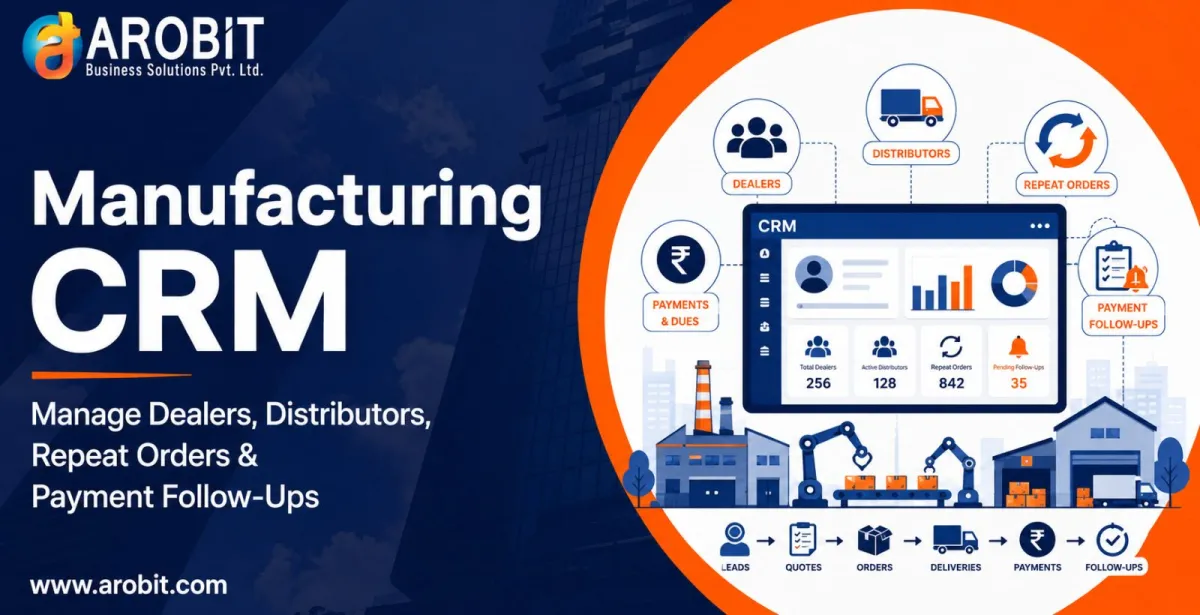
Manufacturing businesses often depend on a network of dealers, distributors, channel partners, and repeat customers to drive revenue growth. As these networks expand, managing relationships, tracking orders, coordinating communication, and ensuring timely payments become increasingly complex.
Many manufacturers still rely on spreadsheets, emails, phone calls, and disconnected systems to manage these activities. While these methods may work initially, they often create operational challenges as sales volumes increase.
This is where manufacturing CRM software becomes valuable. A CRM designed specifically for manufacturing businesses helps centralize customer information, improve sales visibility, strengthen distributor relationships, and streamline follow-up processes.
In this article, we'll explore how manufacturing CRM software helps manufacturers manage dealers, distributors, repeat orders, and payment follow-ups more effectively in 2026.
Why Manufacturers Need More Than Traditional Customer Management
Manufacturing sales cycles differ significantly from retail or service-based businesses.
Manufacturers often work with:
Regional distributors
Channel partners
Dealers
Wholesale buyers
OEM customers
Repeat business accounts
Managing these relationships requires more than basic contact management.
Sales teams must track:
Order history
Pricing agreements
Dealer performance
Outstanding payments
Inventory availability
Customer communication records
Without centralized visibility, important opportunities and customer interactions can easily be missed.
This is one of the primary reasons manufacturers are investing in specialized manufacturing CRM software solutions.
Centralized Dealer and Distributor Management
One of the most important functions of manufacturing CRM software is providing a centralized platform for managing dealer and distributor networks.
Instead of maintaining information across multiple spreadsheets, manufacturers can access:
Dealer profiles
Contact information
Territory assignments
Purchase history
Credit limits
Performance metrics
This visibility helps sales teams understand how each dealer contributes to overall business performance.
For example, managers can quickly identify:
High-performing distributors
Inactive dealers
Declining order trends
Regional sales opportunities
Centralized management improves coordination and supports stronger channel relationships.
Tracking Repeat Orders More Effectively
Repeat orders often represent a significant portion of manufacturing revenue.
However, many businesses struggle to track customer purchasing patterns and identify reorder opportunities.
A CRM system helps manufacturers:
Monitor order frequency
Track purchasing behavior
Identify seasonal demand patterns
Generate reorder reminders
Maintain customer communication records
Sales teams can proactively engage customers before inventory runs low or purchasing cycles are missed.
This approach helps increase customer retention while improving sales predictability.
Many organizations implementing sales CRM for manufacturing environments report improved visibility into customer buying behavior and stronger repeat business performance.
Improving Sales Team Productivity
Manufacturing sales teams frequently manage large territories and multiple customer accounts.
Without structured systems, sales representatives often spend considerable time searching for information, updating spreadsheets, and coordinating follow-ups.
A CRM platform centralizes key activities such as:
Lead tracking
Customer interactions
Meeting records
Follow-up reminders
Opportunity management
This allows sales teams to focus more on relationship building and business development.
Managers also gain visibility into pipeline activity, helping them monitor sales performance and identify opportunities that require attention.
Managing Payment Follow-Ups More Efficiently
Payment collection remains a challenge for many manufacturing businesses.
Outstanding invoices can create cash flow pressures and impact operational planning.
Modern manufacturing CRM software platforms help organizations track:
Invoice status
Payment due dates
Collection activities
Customer payment history
Outstanding balances
Automated reminders can be configured for:
Upcoming due dates
Overdue payments
Follow-up communications
Sales and finance teams can work together more effectively because customer information is accessible from a single platform.
This reduces communication gaps and improves collection efficiency.
Better Coordination Between Sales and Operations
One challenge many manufacturers face is the disconnect between sales commitments and operational capabilities.
For example:
Sales teams may promise delivery timelines without checking inventory availability.
Distributors may place urgent orders without visibility into production schedules.
Operations teams may struggle to forecast demand accurately.
Integrating CRM with operational systems improves collaboration across departments.
Sales teams gain access to relevant operational information, while production and inventory teams receive greater visibility into upcoming demand.
This alignment helps improve customer service and operational planning.
Supporting Inventory Forecasting and Demand Planning
Accurate demand forecasting is critical for manufacturing businesses.
Historical customer data stored within CRM systems can provide valuable forecasting insights.
When integrated with inventory forecasting software for manufacturing, CRM platforms help businesses analyze:
Repeat purchasing trends
Seasonal demand fluctuations
Distributor ordering patterns
Product demand by region
This information supports more accurate procurement, production planning, and inventory management decisions.
Organizations that combine CRM data with inventory forecasting software for manufacturing often experience fewer stockouts and reduced excess inventory.
Enhancing Distributor Communication
Dealer and distributor relationships require ongoing communication.
Manufacturers frequently need to share:
Product updates
Pricing changes
Promotional offers
Inventory availability
New product launches
CRM systems maintain a complete communication history for every account.
This ensures that sales representatives have visibility into:
Previous discussions
Customer concerns
Follow-up commitments
Support requests
Better communication often leads to stronger channel relationships and increased customer loyalty.
Performance Monitoring and Reporting
As dealer networks expand, performance measurement becomes increasingly important.
Manufacturing CRM platforms provide dashboards and reports that help organizations monitor:
Sales performance
Dealer productivity
Revenue by region
Customer acquisition trends
Repeat order rates
Outstanding receivables
Decision-makers can identify patterns, evaluate performance, and make data-driven adjustments to sales strategies.
This level of visibility is difficult to achieve using spreadsheets or disconnected systems.
The Growing Role of Custom CRM Solutions in Manufacturing
While many CRM platforms offer standard functionality, manufacturing businesses often have unique operational requirements.
Examples include:
Multi-level distributor networks
Territory-specific pricing
Industry-specific approval workflows
Complex quotation processes
Specialized reporting needs
In these situations, custom manufacturing software development allows businesses to build CRM capabilities that align closely with their sales and operational processes.
Customized solutions can improve user adoption and ensure that workflows reflect actual business requirements.
For manufacturers with highly specialized distribution models, custom manufacturing software development may provide greater long-term value than generic CRM platforms.
Choosing the Right Manufacturing CRM Solution
Before selecting a CRM platform, manufacturers should evaluate:
Dealer Network Complexity
How many distributors, dealers, and channel partners need to be managed?
Sales Process Requirements
Are there industry-specific workflows that require customization?
Integration Requirements
Should CRM connect with ERP, inventory, or accounting systems?
Reporting Needs
What operational and sales insights are required?
Future Scalability
Can the platform support future growth and expansion?
Answering these questions helps organizations select solutions that align with both current needs and future objectives.
Conclusion
Managing dealer networks, distributor relationships, repeat orders, and payment follow-ups becomes increasingly challenging as manufacturing businesses grow. Implementing the right manufacturing CRM software helps organizations centralize customer information, improve sales visibility, strengthen channel relationships, and support better decision-making.
When combined with operational systems and forecasting tools, CRM becomes a powerful platform for improving customer retention, sales performance, and cash flow management. Manufacturers looking to modernize their sales operations often benefit from working with experienced technology partners who understand the unique requirements of the manufacturing sector. With expertise in enterprise software, CRM solutions, workflow automation, and digital transformation, Arobit helps manufacturers develop systems that improve operational efficiency and support long-term business growth.
Frequently Asked Questions
1. What is manufacturing CRM software?
Manufacturing CRM software is a customer relationship management system designed specifically for manufacturing businesses. It helps manage dealers, distributors, sales activities, repeat orders, customer communication, and payment follow-ups.
2. How does CRM help improve repeat orders?
CRM systems track customer purchasing history, order frequency, and buying patterns. This allows sales teams to identify reorder opportunities and proactively engage customers.
3. Can manufacturing CRM integrate with ERP systems?
Yes. Many manufacturing CRM platforms can integrate with ERP, inventory management, accounting, and forecasting systems to provide better visibility across business operations.


Comments
No comments yet. Be the first to share your thoughts!