




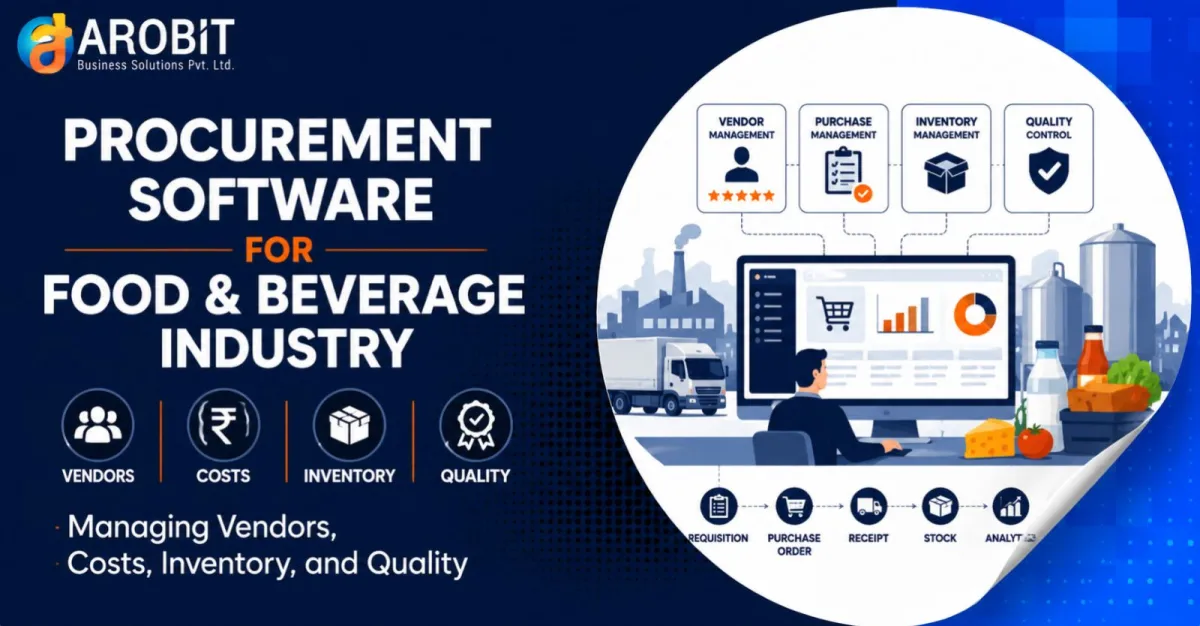
Food and beverage manufacturers purchase ingredients that directly affect product quality, production continuity, cost, and shelf life. A delayed flour shipment can interrupt a bakery production schedule. An inconsistent dairy supplier may create quality concerns. Unexpected increases in edible oil, sugar, packaging, or imported ingredients can quickly change production costs.
Managing these variables through spreadsheets, emails, and manual purchase records makes procurement harder as the business grows. Procurement software for food & beverage industry helps procurement teams organize supplier information, purchase requirements, inventory availability, approvals, and quality records within a connected system.
For food processors, beverage producers, cloud kitchens, packaged food manufacturers, and large production facilities, better procurement control is not simply about purchasing at the lowest price. It is about receiving the right material, from an approved supplier, in the required quantity and at the right time.
Why Food and Beverage Procurement Requires Better Control
Procurement in food manufacturing differs from purchasing general office or industrial supplies. Many raw materials are perishable, batch-specific, seasonal, or sensitive to storage conditions.
A procurement manager may need to consider:
Ingredient shelf life
Supplier lead times
Minimum order quantities
Seasonal price changes
Available warehouse stock
Batch and lot information
Quality approval requirements
Production schedules
Packaging material availability
Procurement software for food & beverage industry gives teams a structured way to manage these factors before creating or approving purchases.
The right procurement solutions for food & beverage industry also help connect purchasing decisions with actual production and inventory requirements. This reduces the risk of buying materials based only on outdated stock reports or departmental estimates.
Where Manual Procurement Creates Problems
A growing food business may have several buyers, warehouses, production locations, and suppliers. When each team maintains separate records, procurement visibility becomes limited.
For example, a buyer may raise an order for packaging material without knowing that another warehouse already holds sufficient stock. In another case, production may urgently require an ingredient, but the procurement team receives the request too late.
These gaps can lead to:
Duplicate purchases
Excess raw material inventory
Emergency procurement
Higher purchasing costs
Expired ingredients
Delayed production
Inconsistent supplier selection
A centralized food and beverage procurement software creates a common purchasing workflow and provides current information to procurement, inventory, and production teams.
How Procurement Software Supports Food and Beverage Operations
Modern procurement software for food & beverage industry connects purchase requests, supplier records, quotations, approvals, purchase orders, material receipts, and inventory information.
Instead of following procurement through email chains, teams can view the status of each requirement from a central dashboard.
An F&B procurement management software can also define approval levels based on purchase value, material category, department, or business location. For example, routine purchases may follow a standard approval process, while high-value ingredient orders may require additional management authorization.
This creates greater accountability without depending on manual follow-ups.
Managing Food Suppliers and Vendor Performance
Food manufacturers often work with multiple suppliers for the same ingredient. Price is important, but it should not be the only factor considered when choosing a vendor.
A vendor management software for food industry can maintain information related to:
Supplier categories
Approved materials
Pricing history
Delivery performance
Rejection records
Lead times
Quality observations
Purchase history
Procurement teams can compare supplier performance before issuing the next order.
Similarly, supplier management software for food manufacturers provides a centralized record of supplier interactions and performance. If one supplier frequently delivers late or materials repeatedly fail quality checks, purchasing managers can review historical data rather than relying on individual recollection.
Controlling Purchase Orders and Approval Workflows
Manual purchase orders can create version control problems, especially when quantities, prices, or delivery dates change after initial approval.
Purchase order software for food and beverage helps standardize the purchase order process. Teams can create orders against approved requirements, maintain supplier pricing, define delivery schedules, and track pending quantities.
For businesses with multiple approval levels, purchase order software for food and beverage can route requests to the appropriate authority before an order is issued.
This helps management understand:
What is being purchased
Who requested the material
Which supplier was selected
What price was approved
When the material is expected
These controls become especially important as procurement volumes increase.
Improving Raw Material Procurement
Production schedules in food manufacturing depend heavily on ingredient availability. A shortage of one critical raw material may delay an entire batch even when every other ingredient is available.
Raw material procurement software food industry helps purchasing teams review requirements against current stock, open purchase orders, and planned production.
For example, if a beverage manufacturer schedules a production batch, the system can help identify requirements for concentrates, sweeteners, additives, bottles, caps, and labels. Buyers can then focus on actual shortages.
Using raw material procurement software food industry also improves purchasing coordination when ingredients have different lead times or storage limitations.
Connecting Inventory and Procurement
Procurement decisions become more accurate when buyers can see current inventory information.
An inventory and procurement software for food business connects purchasing activity with available stock, committed inventory, pending receipts, and consumption patterns.
This helps reduce two common problems: over-purchasing and stock shortages.
Consider a food manufacturer that consumes a specific ingredient across three product lines. A standalone purchase sheet may not show total consumption accurately. An inventory and procurement software for food business can provide a consolidated view of material movement and current requirements.
This allows procurement teams to make purchasing decisions using operational data rather than assumptions.
Managing Costs Without Compromising Quality
Food manufacturers face frequent changes in ingredient, transportation, packaging, and supplier costs. Simply choosing the cheapest quotation can create operational or quality risks.
Procurement software for food & beverage industry allows buyers to review price histories and compare supplier quotations more systematically.
A procurement team can evaluate:
Previous purchase price
Current quotation
Supplier lead time
Minimum order quantity
Quality performance
Delivery history
This provides better context for supplier negotiations and purchasing decisions.
A well-planned F&B procurement management software can also support budget controls and purchase variance reporting, helping finance and procurement teams identify unusual cost changes.
Supporting Quality Control During Procurement
Ingredient quality directly influences the final food product. Procurement and quality teams therefore need to work closely.
A food manufacturing procurement system can connect material receipts with quality inspection workflows. When a raw material arrives, the quality team can review the batch before it becomes available for production.
Depending on the factory process, the system may record:
Supplier batch details
Internal lot numbers
Inspection status
Accepted quantities
Rejected quantities
Quality observations
Material release status
A connected food manufacturing procurement system helps prevent rejected or pending materials from being treated as usable stock.
This becomes particularly valuable for businesses managing high production volumes or multiple material categories.
Integrating Procurement with Food and Beverage ERP
Procurement should not operate separately from production, inventory, warehouse, quality, and finance.
An ERP procurement module for food and beverage industry can connect purchasing activities with wider business processes. When production requirements change, procurement teams gain better visibility into material demand. When goods arrive, warehouse and quality workflows can be updated. Approved invoices can then move into the financial process.
Food and Beverage ERP Software can provide this connected operational structure across departments.
A well-configured ERP procurement module for food and beverage industry may also support purchase requisitions, quotation comparisons, supplier records, purchase orders, goods receipts, quality status, and purchase reporting.
For manufacturers with business-specific approval or production workflows, working with an experienced Food and Beverage software development provider can help align the procurement module with actual operational requirements.
Choosing the Right Procurement Software
Not every procurement platform is designed for food manufacturing. Businesses should evaluate how well the software handles material characteristics, quality processes, and production dependencies.
When comparing procurement solutions for food & beverage industry, consider whether the system can:
Manage multiple suppliers for each material
Connect procurement with inventory
Track supplier pricing history
Support purchase approval workflows
Record quality inspection status
Manage batch-related information
Monitor pending purchase orders
Generate procurement reports
Integrate with production planning
The right food and beverage procurement software should reflect how the business purchases, receives, inspects, and consumes materials.
Manufacturers should also assess customization, user training, integration support, and the provider's understanding of food production processes.
Why Custom Procurement Software May Be Necessary
Generic procurement applications may handle purchase orders effectively but struggle with food-specific processes such as quality holds, ingredient shelf life, batch traceability, or production-linked material planning.
Custom F&B software development allows manufacturers to configure procurement workflows around their operational structure.
A business may require supplier approvals based on material categories, separate quality processes for high-risk ingredients, or procurement rules for multiple production facilities.
In such cases, Food and Beverage ERP Software can be configured to connect procurement with production planning, inventory, warehouse management, and quality control.
The objective is not to add unnecessary features. The software should remove information gaps and help teams manage purchasing decisions more consistently.
Conclusion
Procurement affects production continuity, material costs, inventory levels, supplier relationships, and final product quality. As food businesses expand, manual purchase records and disconnected spreadsheets make it increasingly difficult to control these areas.
Procurement software for food & beverage industry gives purchasing teams better visibility into material requirements, suppliers, purchase orders, inventory, and quality processes. With connected procurement data, manufacturers can identify shortages earlier, review vendor performance, monitor purchasing costs, and coordinate more effectively with production teams.
Arobit brings experience in developing custom ERP and enterprise software for process-driven businesses. For food and beverage manufacturers reviewing their procurement workflows, Arobit can help assess operational requirements and build software that connects purchasing with inventory, production, warehouse, and quality processes.
Frequently Asked Questions
1. What is procurement software for the food and beverage industry?
Procurement software helps food and beverage businesses manage purchase requirements, suppliers, quotations, approvals, purchase orders, material receipts, and procurement reporting. It can also connect purchasing with inventory, production, and quality processes.
2. How does procurement software help manage food suppliers?
The software maintains supplier records, purchase history, pricing, delivery performance, and quality information. Procurement teams can use this data to compare vendors and make more informed purchasing decisions.
3. Can procurement software integrate with inventory and production systems?
Yes. Integrated procurement software can connect with inventory and production planning systems. This helps buyers review stock availability, pending purchase orders, and material requirements before raising new purchases.


Comments
No comments yet. Be the first to share your thoughts!