





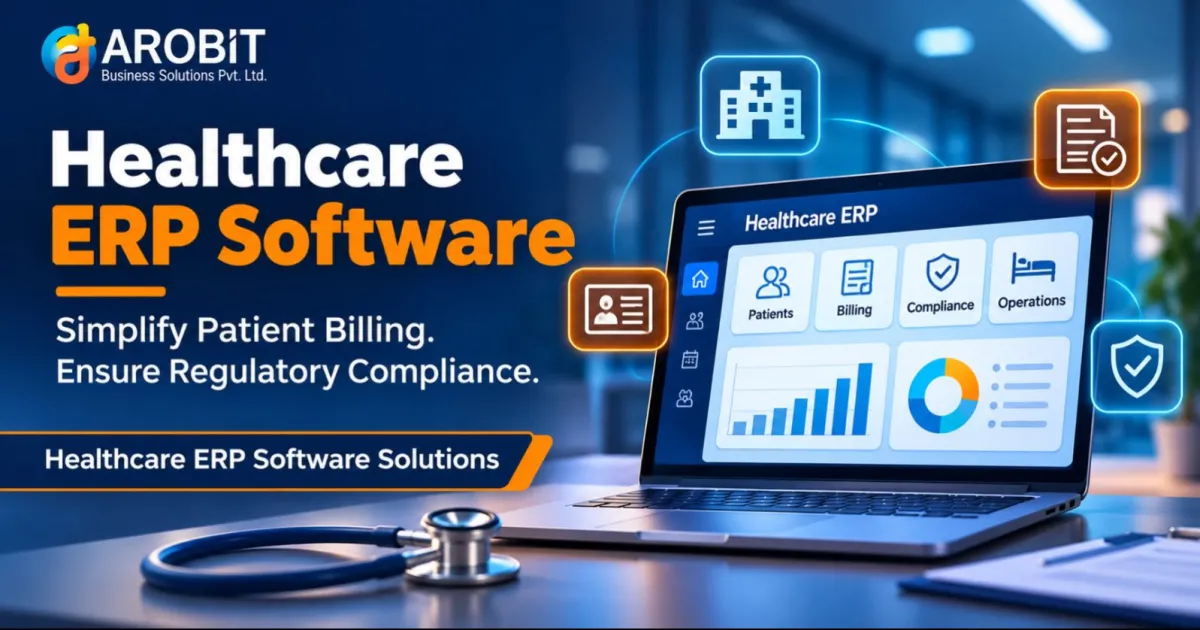
In a hospital, a billing mistake is rarely just lost revenue. It can mean a patient disputing a charge that should never have existed, or a claim rejected weeks after the treatment is done. Add strict rules on how patient data is stored and shared, and healthcare becomes one of the hardest environments to run on disconnected tools. Healthcare ERP Software exists to bring billing, records, and compliance into one system, so the numbers and the rules hold together.
This guide explains the two mechanics that decide whether a healthcare operation runs cleanly or leaks money and risk. One is patient billing, which turns care delivered into a claim that actually gets paid. The other is regulatory compliance, which keeps sensitive data handled the way the law in each market demands.
Why Healthcare Runs on More Than a Patient Record
A clinic with one doctor can run on an appointment book and a card machine. Scale to several departments, multiple payers, and thousands of patient records, and that approach starts losing money and breaking rules it did not know applied. Billing errors pile up, audits become fire drills, and nobody can prove who accessed which record when.
The stakes are higher here than in most industries, because the data is sensitive and the penalties are real. Custom ERP Software Development helps when billing, records, and compliance need to live in one system rather than three tools that do not talk. If you are still mapping which systems your organization needs, our guide to types of ERP systems is a useful starting point.
Healthcare remains the most expensive industry for data breaches, at an average of US$7.42 million per breach. — IBM, Cost of a Data Breach Report 2025
That figure is why compliance is not a box-ticking exercise in healthcare. A single mishandled record can cost more than a year of billing improvements saves.
What Healthcare ERP Software Actually Does
At its core, the system is the single record of a patient's care, cost, and consent. For a hospital or clinic group, it brings together four things that disconnected tools keep apart.
- Patient records linked to billing, so care delivered becomes an accurate claim
- Scheduling, admissions, and departments coordinated in one hospital management software layer
- Electronic health records shared safely between clinicians who need them
- An access log proving who viewed or changed each record, for audits
None of this works as a stack of separate apps. The value comes from one record feeding billing, care, and compliance at once, so a change in one place does not leave the others out of date.
Patient Billing: From Service to Settled Claim
Charge Capture and Coding
Billing starts the moment care is given. If the service is not captured and coded correctly at that point, the claim that follows is already wrong. Good medical billing software links each charge to the treatment record, so coding reflects what actually happened rather than what someone remembered to enter later.
Claims and Denials
A submitted claim is not a paid claim. Payers reject claims for missing codes, eligibility gaps, and documentation errors, and each denial delays cash and adds rework. A system that validates a claim before it goes out catches those errors early, which is where most recoverable revenue is won or lost.
Regulatory Compliance Across Jurisdictions
Compliance is where healthcare software earns its keep, because the rules are strict and they differ by market. A provider operating in more than one country does not face one rulebook but several.
The United States enforces HIPAA, set out by the US Department of Health and Human Services. The European Union applies GDPR to health data, and India's Digital Personal Data Protection Act sets its own consent and storage rules. Capable Healthcare Software Development builds these controls into how data is stored, accessed, and logged, so healthcare compliance software enforces the rules automatically rather than relying on staff to remember them.
| Factor | Disconnected Tools | Integrated Healthcare ERP |
|---|---|---|
| Billing accuracy | Manual coding, frequent denials | Charge linked to record, validated early |
| Data access | Hard to track | Logged and auditable per user |
| Compliance | Reactive, audit-driven | Enforced by configured rules |
| Records | Scattered across systems | One shared, consistent record |
| Reporting | Rebuilt by hand | Drawn from one source |
Where AI Fits in Healthcare Operations
Within an AI-Enhanced ERP setup, the first useful applications are practical rather than futuristic. The system flags claims likely to be denied before they are submitted and highlights unusual access patterns that may signal a data risk. These sit on top of solid billing and compliance foundations, not as a replacement for getting those basics right first.
Choosing the Right Healthcare System for Your Organization
Not every tool that markets itself to healthcare handles billing and compliance at the depth a growing provider needs. A few questions narrow the decision quickly.
- Does the medical billing software validate claims before submission, or only after denial?
- Does it enforce healthcare compliance software rules for every market you operate in?
- Does the hospital management software connect scheduling, admissions, and billing, or silo them?
- Can it share electronic health records securely while logging every access?
- Does it fit the systems you already run, rather than forcing a full replacement?
Generic tools can handle one piece well enough. They rarely connect billing, records, and compliance the way a purpose-built system does, which is why providers that outgrow them usually need an integrated approach rather than another add-on.
Frequently Asked Questions
Q: What does Healthcare ERP Software do that separate billing and records tools do not?
It connects them. Care delivered becomes an accurate claim, records stay consistent across departments, and every data access is logged for compliance, all from one system rather than three that must be reconciled by hand.
Q: How does the software handle compliance in different countries?
It applies the rules for each market, such as HIPAA in the United States, GDPR in the European Union, or India's data protection law, to how records are stored, accessed, and logged. When a rule changes, the configuration updates centrally instead of relying on manual steps.
Q: Does adopting it mean replacing our existing clinical systems?
Usually not. A well-planned build integrates with the clinical and records tools you already use, adding billing and compliance coordination around them. The goal is one connected source of truth, not a costly rebuild.
Ready to Connect Billing, Records, and Compliance?
Arobit Business Solutions structures enterprise ERP and healthcare engagements with written delivery plans, phased rollouts, and dedicated support. That track record spans 15+ years and clients across more than 15 countries.
Schedule a consultation to review your billing and compliance workflows. Discuss Your Project Requirements with Arobit's team.





Comments
No comments yet. Be the first to share your thoughts!